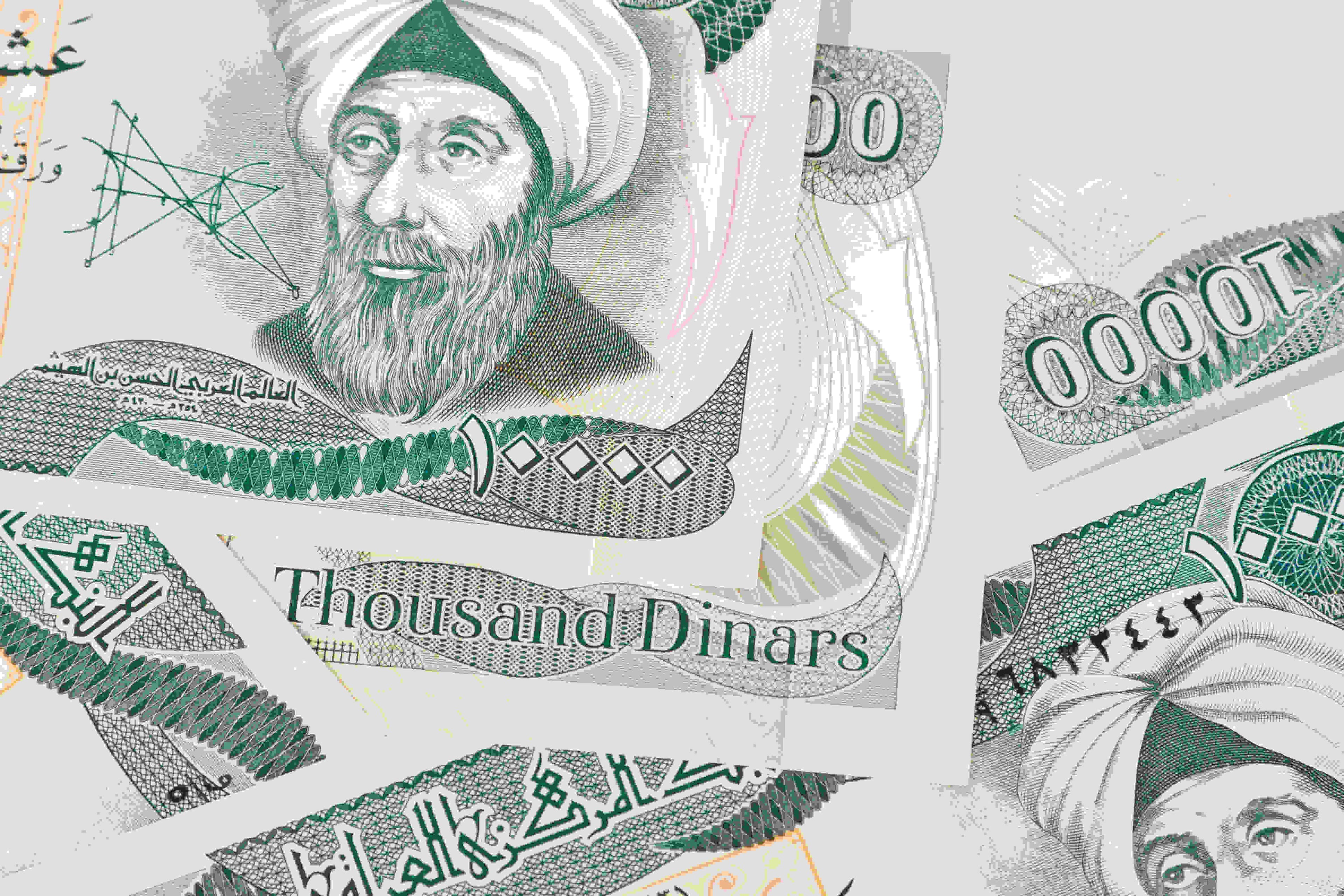
The Central Bank of Iraq (CBI) has formally informed the Ministry of Finance that the official exchange rate to be used in the draft Federal General Budget Law for 2026 will be 1,300 Iraqi dinars per US dollar – the same rate the bank has maintained since early 2023.
This confirmation comes alongside a decision by the Council of Ministers to endorse a related exchange-rate amendment, effectively cementing 1,300 dinars per dollar as the budgetary benchmark for the coming fiscal year.
Background: How Iraq’s Exchange Rate Has Evolved Recently
The official Iraqi dinar rate has been at 1,300 dinars per dollar since February 2023, when the CBI adjusted it from higher past levels in an effort to strengthen the currency’s external value and align monetary and fiscal policies.
Despite the official floor, local market rates have traded significantly weaker in recent months. In informal and parallel market channels, the U.S. dollar has often exchanged for around 1,440–1,450 dinars or more, according to Iraqi News, reflecting broader supply and demand pressures and economic sentiment among traders.
However, the Central Bank has repeatedly denied plans for further official devaluations and emphasized its commitment to stability, citing low inflation and robust foreign reserves.
Exchange Rate Mechanics for 2026: Official vs. Market Rates
According to numerous sources, the CBI’s operational framework for foreign exchange in 2026 will work roughly as follows:
-
Official Rate: CBI buys U.S. dollars from the Ministry of Finance at 1,300 IQD;
-
Bank Rate: CBI sells dollars to local banks at 1,310 IQD; and
-
Public/Trader Rate: Banks, in turn, offer dollars to the public, traders, and for external transfers (imports) around 1,320 IQD.
This tiered structure creates a spread that supports bank liquidity while anchoring official policy around the long-standing 1,300 dinar rate.
Does This Signal an Iraqi Dinar Revaluation (“RV”)?
For years, speculation around a potential revaluation of the Iraqi dinar has circulated widely among investors and currency watchers. However, the Central Bank of Iraq’s recent confirmation of the 1,300 dinar per U.S. dollar rate for the 2026 federal budget does not represent a revaluation of the currency.
A revaluation would require the Central Bank to officially announce and implement a new exchange rate, resulting in an immediate and measurable change in the dinar’s value across official channels and international markets. In contrast, the rate referenced in the 2026 budget has been unchanged since February 2023 and is being reaffirmed for government accounting and fiscal planning purposes.
The Central Bank has repeatedly emphasized its focus on exchange-rate stability, not sudden appreciation. Budget documents commonly reflect existing policy rather than signal imminent currency reform. As such, while the confirmation of the 1,300 rate reinforces policy continuity and reduces uncertainty around government finances, it should not be interpreted as an indication of an upcoming revaluation.
For buyers and sellers of Iraqi dinar, this distinction is important. The announcement provides clarity and predictability, but it does not alter the current value of the dinar in either official or market exchange environments
What This Means for Iraqi Dinar Traders
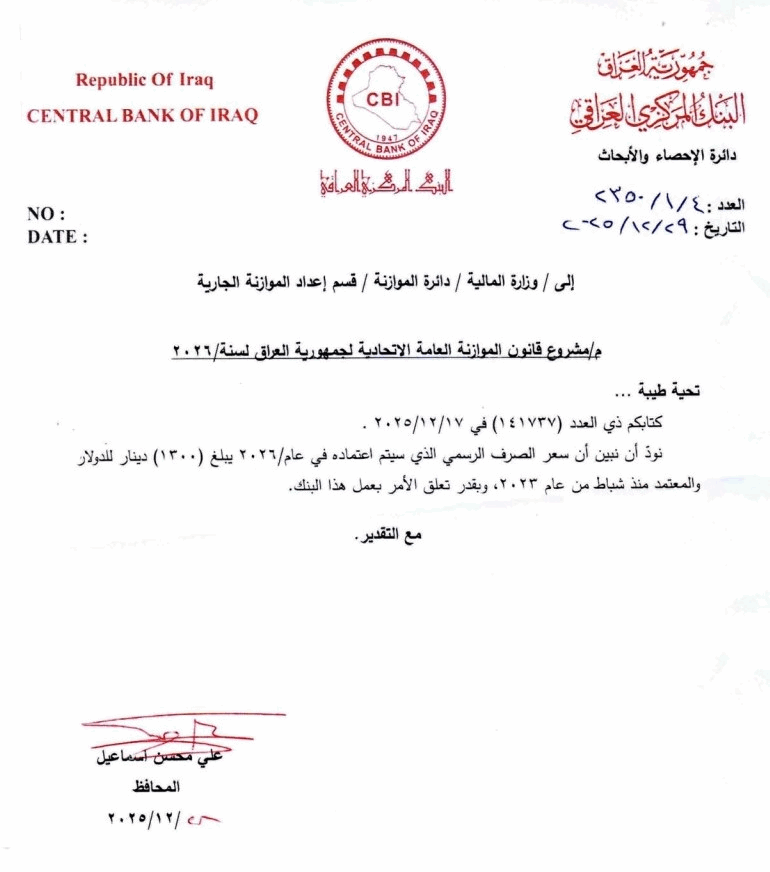
A document issued by the Central Bank of Iraq (CBI) addressed to the Ministry of Finance and is signed by the Governor of the Central Bankstating that the official exchange rate for the US dollar in the 2026 federal budget will remain at 1,300 Iraqi dinars per dollar. Source: Alsumaria TV News
For anyone holding, buying, or selling Iraqi Dinar (IQD), this announcement provides a clear roadmap of the government’s intentions. The primary takeaway is that the Iraqi government intends to maintain the status quo. By keeping the official rate at 1,300 IQD per USD, the government is signaling:
1. Stability in Government Accounting, Not Spikes
This news is a "neutral" signal. Fixing the budget rate at 1,300 dinars reinforces expectations of exchange-rate stability at the governmental level. It confirms the currency isn't being devalued further (which is good), but it also confirms there is no plan for a sudden revaluation in the 2026 budget. This matters for institutional contracts, oil revenue forecasts, government spending plans, and sovereign debt calculations.
2. Official vs. Market Divergence
Despite the official setting, the market rate continues to fluctuate well above 1,300. Traders should note that exchange shops and unofficial markets price the dollar higher, often reflecting liquidity constraints, external demand, and market expectations rather than policy shifts.
3. Potential Impact on Liquidity and Volatility
A sustained gap between the official rate (1,300) and parallel market rates may continue to fuel speculative activity. While the Central Bank’s stance emphasizes stability, local demand dynamics could keep the dinar trading above the official floor. However, this official confirmation helps cap the volatility of the parallel market because it guarantees that the government will continue to supply dollars at 1,320 for legitimate trade.
4. Broader Economic Context
Recent data point to improvements in public debt containment and a modest decline in domestic spending, trends that can support macroeconomic confidence.
Bottom Line for Buyers and Sellers
This announcement is essentially a "steady as she goes" message. It removes the immediate fear of a planned devaluation (like the one in 2020) but also tempers expectations for a major revaluation in the near future. The key takeaways are:
-
The 1,300 dinar per U.S. dollar rate will officially anchor Iraq’s 2026 budget.
-
It does not directly change how the dinar trades on the open market, where prices remain influenced by supply, demand, and sentiment.
-
For individuals and FX traders, this official policy provides a reference point, but actual exchange rates may vary.
As Iraq moves forward with a confirmed exchange-rate framework for 2026, clarity and reliable information matter for anyone buying or selling foreign currency. Stay tuned for ongoing updates and insights into how Iraq’s fiscal policy and currency markets keep evolving. Choosing a trusted currency exchange provider like US First Exchange can make a meaningful difference for any transaction.
With access to real-time exchange rates, smart currency tools, and up-to-date market insights, USFX helps clients navigate volatility with greater confidence and control. Whether you’re looking to buy or sell Iraqi dinar online, US First Exchange offers security, transparency, and competitive rates, ensuring you get fair value and peace of mind with every transaction.