Money runs the world, but most of us rarely stop to notice how strange, clever, or downright surprising it can be. Behind every bill and coin is a story. Behind every swipe of plastic cards or tap of mobile payment technology is a system built over centuries. Once you start looking closer, the everyday US dollar feels a lot less ordinary and a lot more like a quiet marvel of history, science, and problem-solving.
If you are ready to see money in a new way, these interesting, fun facts about money will take you through hidden corners of global currency, surprising origins, and the clever tricks that keep our cash safe.
1.Early American Money Included Fugio Cents With a Message From Benjamin Franklin

The first official coin of the United States was the Fugio Cent, also known as the Franklin Cent, authorized back in 1787. Benjamin Franklin helped influence its look, and he added a simple idea. A sun shines on a sundial with the caption, "Fugio", Latin for "I flee/fly", referring to time flying by, and beneath it are the words Mind Your Business. On the reverse, the motto "We Are One" is surrounded by a chain of thirteen links, representing the original thirteen colonial states.
Taken together, the coin served as a reminder that time matters and that unity strengthens the nation. The Fugio Cent also marks a shift away from the European practice of using heavy-metal money that required weighing and inspection. Early American leaders wanted a currency that symbolized productivity and shared purpose. While the Fugio Cent is long gone, collectors prize it today because it captures the mindset of the early republic in a single small object.
2.The US Dollar Once Included a Gold Certificate Backed by Actual Bullion
Long before digital banking or virtual currency, the United States issued Gold Certificates. These notes were fully backed by gold held in the Treasury. Between the late 1800s and the early 20th century, someone holding one could exchange it for gold at face value. This made this vivid gold and orange paper currency a powerful tool for trade because it represented trust in the government’s supply.
Gold Certificates were eventually removed from everyday circulation during the Great Depression, when the government restructured currency and rules on gold ownership. Today, these rare notes are still collectibles, but they can no longer be redeemed for metal. They remain a reminder of the era when American money was directly tied to physical bullion rather than economic policy or the credit system. The history of currency in the US is truly fascinating.
3.Paper Money Is Not Really Paper at All
The term "paper money," which we typically use to refer to paper currency, is misleading. Actual printer paper would fall apart in no time if used for spending. Modern US bills are made from a durable blend of 75% cotton and 25% linen fibers. That’s why they survive trips through the washing machine better than regular paper.
This durable fabric mix extends the lifespan of each note and helps prevent easy tearing, making U.S. currency both practical and surprisingly sturdy. strengthened with synthetic fibers that help the currency hold up through folding, handling, and moisture. This special currency paper is manufactured under controlled conditions so that its texture, durability, and feel are hard to copy.
The Bureau of Engraving and Printing explains that Federal Reserve notes use this unique mix to prevent wear and stop forgers from getting close to the real thing. Cotton and linen fibers give bills their strength. Embedded colored fibers and security threads help authenticate them. All of this means your wallet holds some surprisingly advanced material science.
4.The Dollar Sign Does Not Have a Fully Agreed Upon Origin
The dollar sign is everywhere, but no one can prove a single origin story with complete certainty. One widely supported explanation suggests that the $ symbol began as a handwritten abbreviation for the Spanish peso. According to this idea, clerks wrote the letters P and S on top of each other. Over time, the curved bottom of the P disappeared, leaving the S with one or two vertical lines.
Another theory says the sign came from the U and S in United States written over each other. Yet another points to older European symbols used in promissory notes. Whatever the source, one thing is certain - the dollar sign has become one of the most recognized marks on the planet.
5.Glow-in-the-Dark Coins Exist
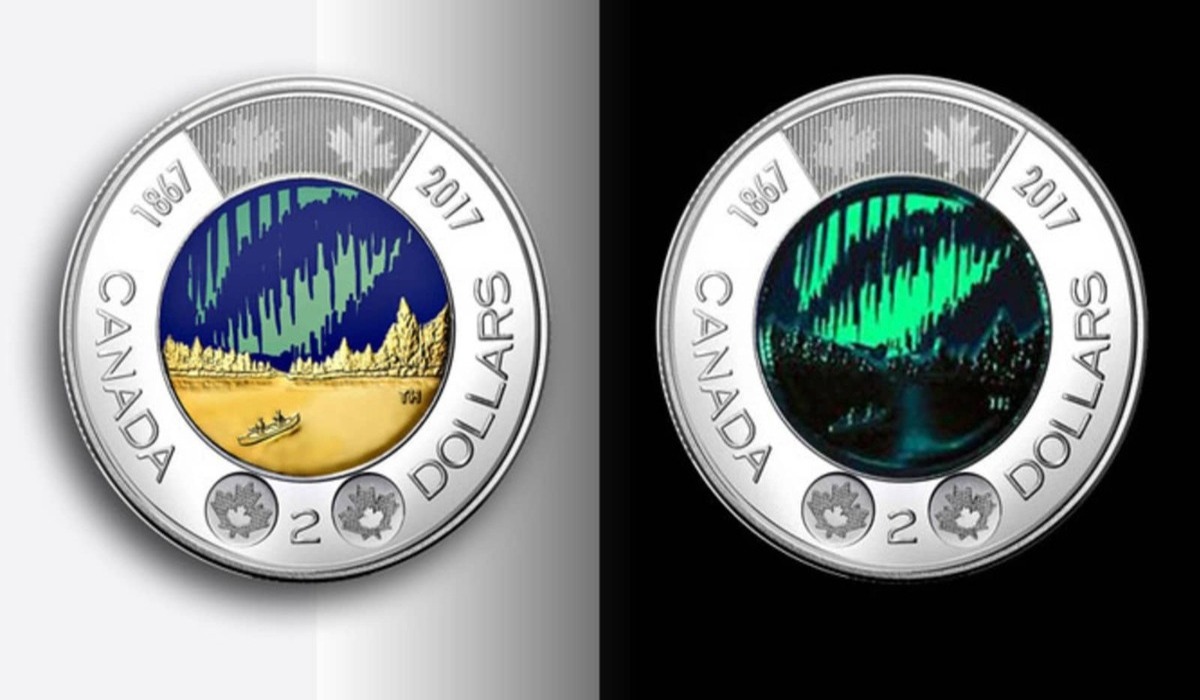
Here's another really fun fact about money you probably didn't know: Canada issued a commemorative coin in 2017 that glows in the dark. This $2 coin, also known as a toonie, lights up with the Aurora Borealis when viewed under UV light. It’s not just a gimmick - it was minted as a legal tender and circulated widely.
It marked Canada’s 150th anniversary and became a collector’s favourite almost immediately. The glow-in-the-dark effect is achieved through luminescent ink, and it’s the first circulating coin of its kind. A true blend of art and innovation, and undoubtedly one of the most interesting money facts on this list.
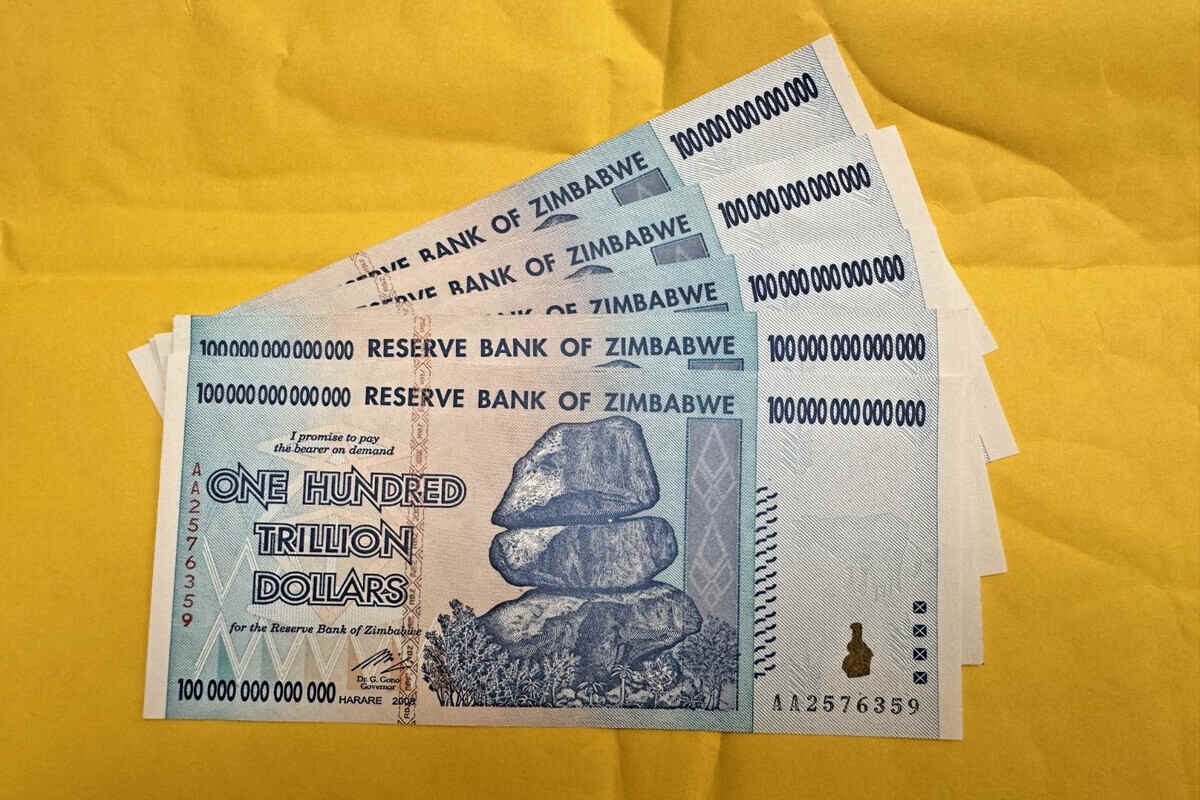
6.The Largest Note Ever Printed Was Worth 100 Trillion Dollars
In 2008, Zimbabwe issued a 100 trillion Zimbabwean dollar note due to hyperinflation so extreme that prices could double in a single day. Due to the rapid decline of the currency’s value, this enormous figure had little buying power - it might get you a loaf of bread, if you were lucky. Although the note had nearly no purchasing power at the time, it is now a popular commemorative souvenir among currency collectors for its shock value and historical significance.
On websites like eBay, these notes often sell for more than $30 USD. What was once a worthless bill now stands as an example of what happens when inflation spirals out of control and as a historical reminder of how quickly money can lose value - and then gain it again in a different form.
7.Interesting Facts About the Famous Faces on Your Cash
Today, it is hard to imagine US paper bills without George Washington on the $1 bill or Alexander Hamilton on the $10 bill. Their portraits, however, were not standard for early currency. The United States once used a wide variety of individuals on its notes, including explorers, senators, and even allegorical figures. It was not until the early 1900s that the government standardized designs around well-known leaders, partly to help people recognize genuine money more easily.
Washington and Hamilton, central figures in the development of American finance, eventually became fixtures on modern Federal Reserve notes. But did you know that Martha Washington is the only woman to ever appear on a U.S. note as a primary portrait? She was featured on the $1 silver certificate in the late 1800s. These portraits are created by skilled money engravers, who work with extreme precision to design lasting images. Even small details, like the olive branch in the eagle’s talons, carry symbolic meaning.
8.Dirty Money? Literally
Studies have shown that the vast majority of dollar bills in circulation have traces of cocaine on them. This doesn’t necessarily mean every bill was used for illicit activity - contamination spreads easily through ATM machines, wallets, and counting devices.
In cities like London and New York, it’s been found that up to 99% of paper bills carry such residues. The contamination can spread from just a few heavily used bills to thousands more through sheer contact. So yes, your cash might be dirtier than you thought - a sobering insight into the journey of a typical bank note.
Ready to sell?
Are you ready to sell your currency? Stop waiting and request a Shipping Kit. We will provide everything you need to ship and receive funds for currencies you own.REQUEST YOUR SHIPPING KIT
9.Security Features on Bills Feature Ester Eggs
Every modern bill you encounter includes multiple layers of protection. Security threads run through the note and glow different colors under ultraviolet light. Color-shifting ink changes tone when tilted. Watermarks sit inside the currency paper itself. Together, these features make it difficult to produce a convincing counterfeit bill.
In the U.S., the Federal Reserve Bank and the Bureau of Engraving and Printing update these features regularly to stay ahead of evolving threats. Even small details like the serial number arrangement and portrait position are intentional. The US Secret Service, which originally started as an anti-counterfeiting agency, maintains information about these features for American money.
Modern banknotes are packed with microprinting, holograms, color-shifting ink, raised textures, and ultraviolet patterns - many of which are invisible at first glance. For example, did you know that the U.S. $100 bill has tiny “USA 100” microtext and a blue 3D security ribbon woven into the paper, not printed on top?
Another detail many miss is that the Latin phrase Annuit Coeptis appears on the reverse of the one-dollar bill, meaning "He favors our undertakings." The phrase expresses optimism in the nation’s goals and reflects ideas promoted during the founding era, and has become an iconic part of the money Americans see every day.
10.Ridges on Coins Are for Safety
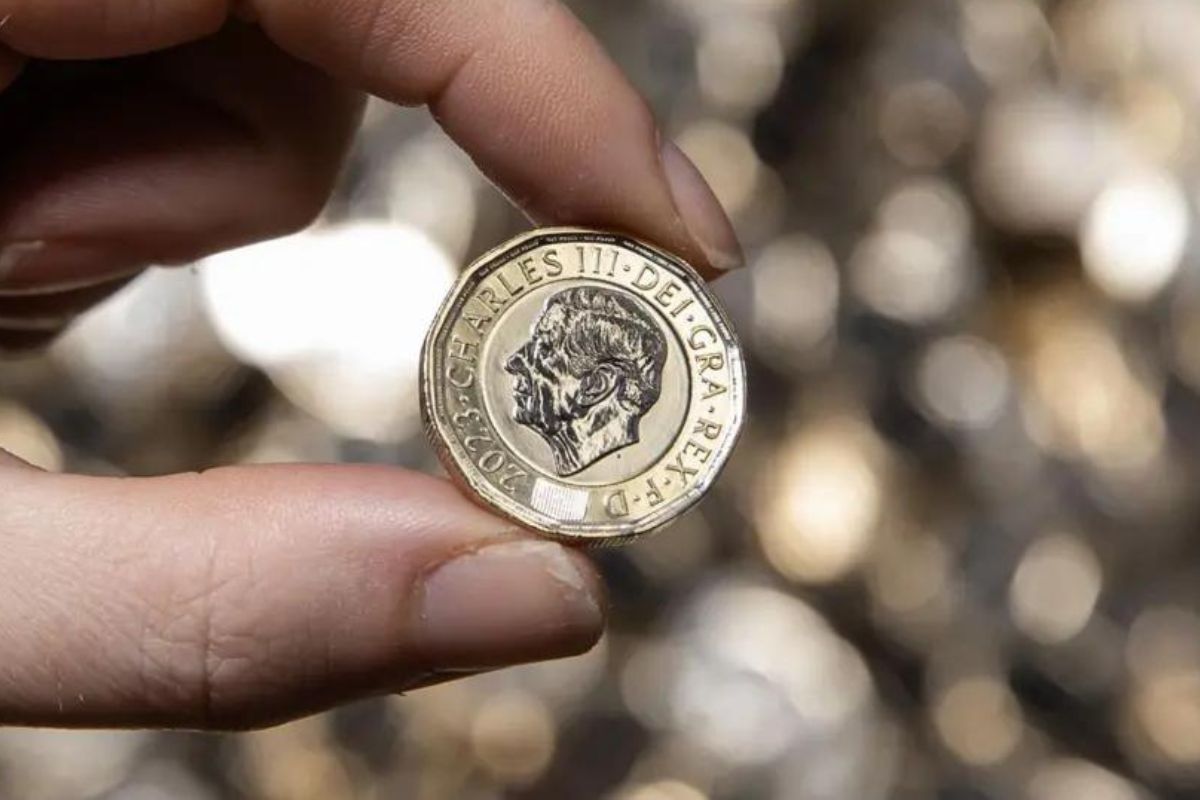
Ever noticed those ridges on the edges of coins? They’re not just decorative. Before modern design standards and minting, many nations used coins made of precious metals like silver or gold. Coins weren’t valuable because of a printed denomination but because of the precious metal content, and merchants weighed coins to confirm authenticity and value.
Back in the day, debasing (reducing metal purity) was a major issue, making coins vulnerable to a problem called coin shaving or clipping. People would clip or file small amounts of metal from the edges and save the shavings. Others drilled small holes in the center and filled them with cheaper metals. To stop this, mints began producing coins with reeded edges, which made it clear if anyone had tampered with the coin.
Today, the practice is illegal and technologically pointless, since modern metal coins are not made of precious metals. Still, the ridges remain as a tradition and a nod to the past - a clever design that links our fun facts about money back to practical needs. The next time you do a coin toss, you might thank those ridges for helping the coin flip properly in mid-air. Small features like this are often overlooked but play a big role in how we interact with our currency.
11.The First Universal Credit Card Came from a Restaurant Mishap
Here’s a surprising fun fact about money: the first universal credit card, the Diners Club Card (1950), was created after its founder forgot his wallet at a business dinner. This incident inspired him and his business partner to create a new payment system that wouldn't require carrying cash, marking the birth of the first multi-purpose charge card.
Early credit cards were imprinted using “knuckle-busters”. Merchants used this clunky device, a manual card imprinter, to make carbon-copy receipts of your card. No chips, no swipes, just pressure and paper. The magstripe we know today was invented in the 1960s when an IBM engineer glued magnetic tape to a card with an iron at home to test the idea.
The first online card payment happened in 1994 when a man bought a Sting CD using his credit card over a website, marking the beginning of modern e-commerce. Credit cards and debit card technology changed the very meaning of money. Instead of carrying cash or metal coins, people could use plastic cards tied to a credit system or bank account. By the 1970s and 1980s, the system expanded worldwide.
12.Mobile Payment Technology Has Roots in the First Automated Teller Machine
Did you know that the Automated Teller Machine, introduced in the late 1960s and early 1970s, was one of the first major steps toward digital money handling? It allowed people to access cash without entering a bank branch. This idea helped normalize the concept of electronic transactions.
As the technology expanded, the foundation was set for mobile payment technology, contactless purchases, and eventually virtual currency platforms we use today. Modern users tap a phone instead of inserting a card. Yet the idea is similar. It is all about convenience, speed, and secure verification.
13.The Strongest Currency In the World Is the Kuwaiti Dinar
The world's highest-value currency is currently the Kuwaiti Dinar. One dinar has a strong exchange rate relative to the US Dollar, at around 1 KWD ≈ 3.25 USD. The reason ties to Kuwait’s economic structure, strong exports, and financial policies. High value does not always equal economic dominance, but it does show that each nation builds its currency on different foundations.
Comparing the strength of global currencies can be eye-opening. For example, the Pound sterling is one of the oldest continuously used currencies in the world. Foreign currency reflects each nation’s history, culture, and economic choices.
14.The Civil War Changed American Money Forever
Before the Civil War, banks issued their own bills, and the quality varied widely. This created confusion and opened the door to fraud. During the conflict, the federal government standardized currency, issuing paper currency backed by national credit. This shift helped unify the economy and fund the war effort.
The period also introduced the first federal income tax, postage stamps used as emergency money, and the earliest forms of modern national banking. Without the Civil War, the United States might have taken far longer to build a unified monetary system.
15.The Song Dynasty Helped Pioneer Paper Bills
The earliest known paper money dates back over 1,000 years to China during the Tang Dynasty, with widespread use expanding under the Song Dynasty, which is often credited with issuing some of the earliest true paper bills in the world. They developed paper money to reduce the need for heavy metal coins during long-distance trade. Merchants could deposit metal money in official offices and receive paper notes in exchange. These notes spread quickly because merchants valued their convenience.
The ancient Chinese government took counterfeiting seriously - so seriously that early banknotes came with warnings like, "Whoever forges notes shall be beheaded." Unlike today’s Federal Reserve Banks, which use microprinting, colour-shifting inks, and watermarks, ancient China relied on fear and capital punishment to maintain confidence in its currency.
This interesting fact about money reveals how a single innovation changed the world economy, and how global currencies evolved into the systems we rely on today.
Money Is More Than Just Coins and Notes
Money is far more than a tool for buying things. It is a mix of history, technology, design, and human ingenuity. Every time you handle paper bills, metal coins, a debit card, or a mobile wallet, you are using systems that took centuries to perfect. These fun facts about money show how much thought and creativity go into every bill and coin we use without a second glance.
And while we may live in a digital age of swipes, taps, and credit cards, these tangible pieces of currency still have a lot to say. If anything, these fun little facts remind us that money, in all its forms, is far more than just numbers - it’s a journey. And what a weird and intriguing journey it is.
If you ever need to buy or sell foreign currency, whether for travel, business, or collecting special currency from around the world, US First Exchange offers a fast and secure online service with competitive exchange rates. Our platform makes it simple to buy or sell any currency you need quickly and securely at competitive exchange rates.
Ready to buy?
Are you ready to buy your currency? Stop waiting and request a Shipping Kit. We will provide everything you need to ship and receive funds for currencies you own.REQUEST YOUR SHIPPING KIT