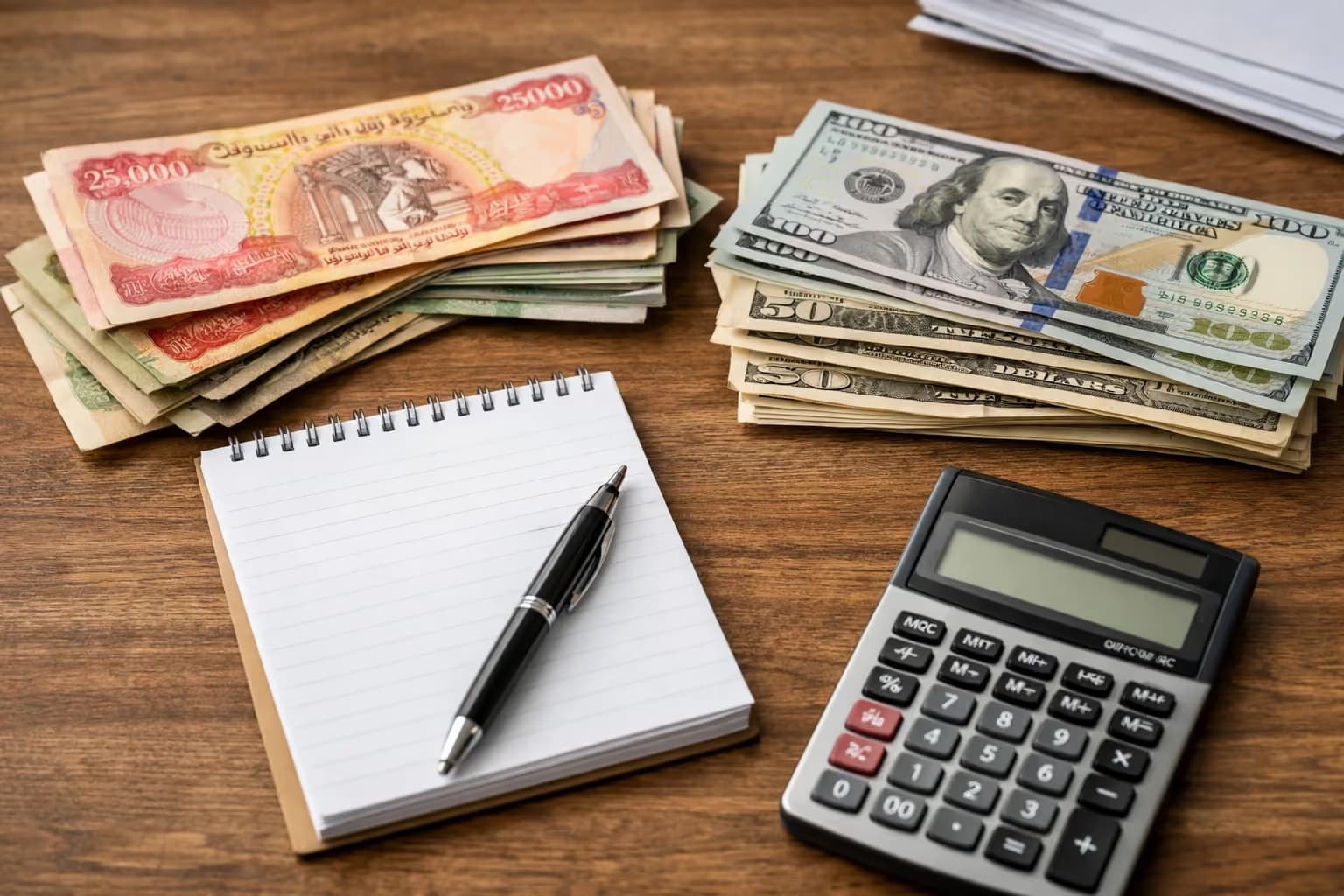
Thousands of Americans hold Iraqi dinar, bought years ago as a souvenir, a gift or a speculative bet. If you are ready to turn those notes back into US dollars, the process is simple once you know what to check and who to trust. This guide walks you through every step, from sorting your notes to getting paid.
The short answer
To sell Iraqi dinar in the US:
- Check that your notes are current-series, genuine and in reasonable condition.
- Compare buyback quotes from registered currency dealers.
- Verify the buyer is registered with FinCEN as a Money Services Business.
- Verify your identity with a US government-issued ID.
- Ship your notes using insured, tracked delivery.
- Get paid in US dollars and keep your receipt for your records.
Before you sell: what to expect
The most important thing to understand is the difference between the official rate and the buyback rate. The Central Bank of Iraq sets an official exchange rate for its banking system, but that is not a price anyone in the US can sell physical notes at.
Outside Iraq, dinar trades in a small market. Every dealer that buys it back has to pay to ship, verify and eventually move the notes, so buyback rates are always below the official rate. Expect a gap, compare quotes, and be wary of anyone offering far more than everyone else.
It also helps to be realistic about value. For years, online promoters have claimed that the dinar is about to "revalue" and make holders rich. Those predictions have not come true, and US regulators and prosecutors have taken action against sellers who made such claims. Sell based on today's rate, not on rumors.
Step 1: Check which notes you have
Before you request a quote, sort your notes and check three things.
Is it the current series?
Iraq introduced its current dinar notes in 2003 and 2004, replacing the notes printed under the previous government. Older series notes, including those showing Saddam Hussein, are no longer legal tender, and most dealers will not buy them. The notes most US holders own are the 25,000 and 50,000 IQD notes from the current series.
Are the notes genuine?
Counterfeit dinar has circulated widely, especially through unofficial sellers. Genuine notes have a security thread, a watermark, raised printing and features that react under UV light. A reputable dealer will verify every note with professional equipment and tell you exactly what was accepted. Our guide to the Iraqi dinar covers the main security features.
What condition are they in?
Clean, flat notes are easiest to sell. Severely damaged, torn or heavily written-on notes may be declined. Do not wash, iron or tape notes before you sell them.
Step 2: Choose where to sell
You have a few options in the US. Here is how they usually compare:
Option
Pros
Cons
Your bank
Familiar and local
Most US banks do not buy Iraqi dinar; those that can may charge high fees or take weeks
Coin and pawn shops
Cash on the spot
Often pay well below dealer rates and may not verify notes
Online marketplaces
You set your own price
Risk of non-paying buyers, chargebacks and counterfeit disputes, plus seller fees
Registered currency dealer by mail
Set quote, identity checks, receipt, traceable payout
You need to ship your notes
For most people, a registered dealer that buys by mail is the most direct option.
Step 3: Check the buyer is legitimate
Use this checklist before you send anyone your dinar:
- FinCEN registration. Currency dealers must register with FinCEN, part of the US Treasury, as a Money Services Business. You can check a business on FinCEN's MSB Registrant Search.
- A real address and phone number. You should be able to call and reach a person.
- Identity checks. A legitimate dealer must ask for your ID. A buyer who does not is a red flag.
- A written quote. You should know exactly what you will be paid before you ship.
- Insured, tracked shipping and a receipt showing every note accepted.
- No investment promises. Be cautious of any dealer who talks up a coming revaluation.
Step 4: Get and lock your quote
Request a quote for the exact notes you hold. Rates are set daily, so ask how long the quote is held. A longer lock gives you time to pack and ship without the price changing under you.
Step 5: Verify your identity
Federal know-your-customer rules require every money services business to verify who it is dealing with. Expect to upload a valid US government-issued ID and to receive payment in your own name. Larger amounts may need extra documentation.
Step 6: Pack and ship your notes
- Sort notes by denomination and count them against your order.
- Pack them flat in a plain padded envelope with no money-related markings.
- Put your invoice or order number inside the package.
- Use only the shipping label your dealer provides, so the package is tracked and insured.
- Keep your tracking number until you are paid.
Step 7: Get paid and keep records
Once your package arrives, the dealer counts and verifies your notes and sends payment. Keep your receipt and records of what you originally paid. Whether you owe tax on a gain depends on your situation, so ask a tax professional.
Common mistakes to avoid
- Waiting years for a promised revaluation instead of selling at today's rate.
- Selling to an unregistered buyer who will not verify your identity.
- Mailing notes without insurance or tracking.
- Mixing old-series notes into your order and having them rejected.
- Not comparing at least two buyback quotes.
Selling Iraqi dinar with US First Exchange
US First Exchange is a Los Angeles currency exchange registered with FinCEN, part of the US Treasury, as a Money Services Business. When you sell Iraqi dinar to us:
- Your quote is locked for 30 days once you place your order.
- Shipping is free with a prepaid FedEx label, and your package is insured for the value of your currency.
- Every note is checked on De La Rue verification machines, and you get a written receipt.
- You are paid by e-check (no fee) or check by mail within 24–48 business hours after verification.
- We buy from customers in every U.S. state except Texas, Illinois, Washington and New Mexico.
Call 310-982-1743, 10am–5pm Pacific Time, if you have questions before you sell.
Frequently asked questions
Who buys Iraqi dinar in the US?
Registered currency dealers buy Iraqi dinar, usually by mail. Most US banks do not, and coin shops often pay much less.
Can I cash in Iraqi dinar at a bank?
Most US banks do not buy Iraqi dinar. A FinCEN-registered currency dealer is usually the most direct way to cash out.
Why is the buyback rate lower than the official rate?
Physical dinar has a small market outside Iraq. Dealers pay to ship, verify and resell the notes, so every buyback rate sits below the official rate.
Can I sell old Saddam-era dinar notes?
Most dealers, including US First Exchange, do not buy them. Pre-2003 notes are no longer legal tender.
What do I need to sell Iraqi dinar?
A valid US government-issued ID, a US address and payout details in your own name.
Is it safe to mail Iraqi dinar?
Yes, if you use the dealer's tracked, insured shipping label and pack the notes discreetly.
Ready to sell?
See today's buyback rate and lock your quote for 30 days. Sell Iraqi dinar now, or buy Iraqi dinar if you are on the other side of the trade.